
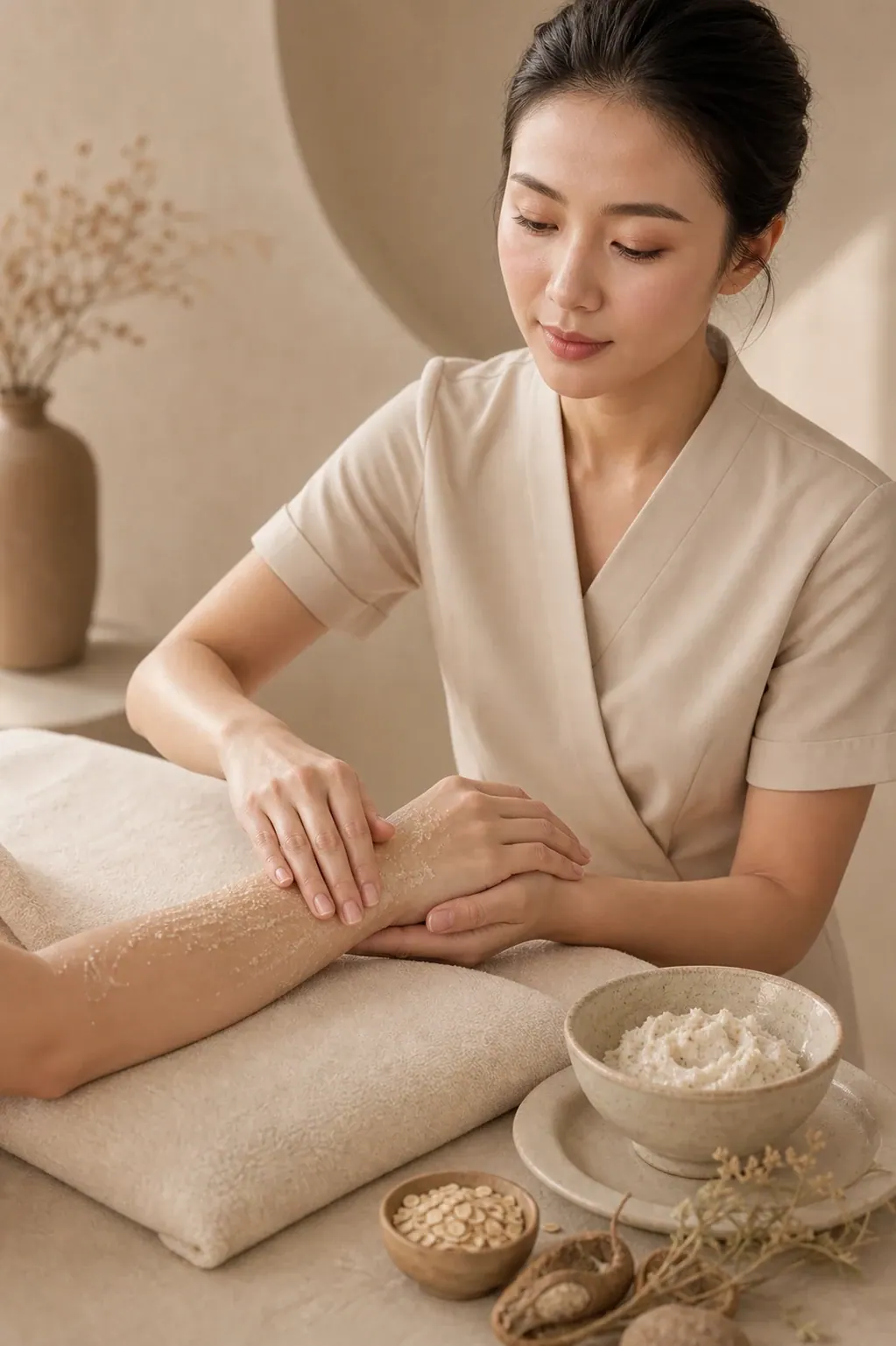
In Da Nang's warm, humid coastal climate, daily outdoor commutes, fitted workout wear, water-resistant body sunscreen and rich hair conditioners make the upper back, shoulders and arms especially prone to clogged pores and lingering dark marks. This guide explains how to tell common types of bumpy body skin apart at home, how a simple change in shower order prevents back congestion, and how to pair everyday home care with periodic in-spa body treatments.
How to tell three common types of bumpy body texture apart
Not every bump on the torso or arms is classic body acne. By checking your skin in natural daylight and running clean fingertips lightly across dry skin, you can usually distinguish three common patterns:
- Tiny, uniform bumps on the outer upper arms and thighs (Keratosis Pilaris): Often nicknamed “chicken skin”, these tiny, painless bumps sit directly over hair follicles and feel like fine sandpaper. They may look skin-coloured, faintly white or ringed with mild pinkness, yet they never form fluid-filled pustules. They occur when excess keratin protein forms a dry plug at the mouth of the follicle.
- Sweat and residue congestion across the upper back and chest: Concentrated along the V-zone between the shoulder blades where sebaceous glands are larger and more active. When sweat, sebum, water-resistant body sunscreen or hair conditioner film remain on the skin, pores become blocked and form small clogged bumps that turn tender under backpack straps or tight sports bras.
- Post-shave bumps and trapped ingrown hairs: Scattered along the arms, legs or nape of the neck when freshly cut hair shafts curl back beneath a dry, thickened stratum corneum, often leaving shadowy brown Post-Inflammatory Hyperpigmentation (PIH) behind.
If you are unsure whether your skin is ready for surface exfoliation or needs calming hydration first, read our companion guide on when it is the right time to refresh the skin's surface.
Why stiff bath brushes and harsh antibacterial soaps make bumpy skin worse
When the back or upper arms feel rough, the most common instinct is to reach for a stiff loofah, long-handled scrub brush, coarse salt rub or high-pH deodorant soap every evening. Within a few weeks, however, the skin often enters a frustrating cycle: flaky and tight on the surface, yet breaking out in even more reactive red bumps underneath.
As the American Academy of Dermatology (AAD) notes, aggressive physical scrubbing over plugged or sensitized follicles backfires in two ways:
- It triggers defensive hyperkeratinisation: Stripping away natural surface lipids with hot water and harsh surfactants signals the epidermis that the barrier is under attack. In response, keratinocytes produce even thicker, drier surface scales—making Keratosis Pilaris plugs on the upper arms stand out more noticeably.
- It creates micro-tears that deepen post-inflammatory dark spots: Dragging coarse bristles or jagged scrub particles across inflamed back bumps scratches the tops of follicles. Under strong coastal UV exposure, those tiny micro-injuries quickly heal into stubborn brown marks that take months to fade.
The 4-step shower reset that keeps your back and arms clear
Before adding complicated treatment products, adjusting four everyday habits inside the shower removes the most common triggers of back and shoulder congestion:
1. Flip your shower order: Rinse hair conditioner and clip hair up before washing your body
Hair conditioners and masks rely on heavy conditioning agents, silicones and fatty alcohols designed to coat hair fibres. When you rinse conditioner upright at the end of your shower, that invisible film runs straight down your neck, shoulders and spine. Always shampoo and condition first, tilt your head to the side while rinsing, clip wet hair up off your shoulders, and wash your back and chest as the final step.
2. Trade steaming-hot water for lukewarm or cool-warm showers
Very hot water dissolves protective ceramides and lipids within minutes, leaving the outer arms and shins parched. Keep water comfortably warm and limit showers to 10 to 15 minutes.
3. Rinse off sweat and body sunscreen promptly after workouts or commuting
After a beach run, gym session or midday motorbike ride in Da Nang, sitting in damp athletic wear presses sweat and oxidized sunscreen directly into follicular openings. A quick, gentle shower and breathable cotton clothing as soon as you get home prevents hours of pore occlusion.
4. Pat dry gently and moisturise within the “3-minute window”
For bumpy upper arms, timing matters as much as the formula itself. Apply your body cream within three minutes of stepping out of the shower while the stratum corneum is still warm and lightly damp, sealing in water so follicular openings remain supple.
Pairing targeted home-care formulas for smoother texture and even tone
Caring for rough upper arms or post-blemish back marks works best when you combine barrier hydration, targeted spot soothing and non-peeling brightening. You can explore these authentic formulas in our curated at-home skincare catalogue:
- Soften dry, bumpy upper arms and elbows daily after showering: Massage Madeleine Ritchie 16+ Active Mānuka Honey Skin Care Crème onto slightly damp upper arms, shoulders and shins. Its rich moisture and 16+ Active Mānuka honey help soften dry keratin plugs and prevent air-conditioning tightness overnight.
- Calm occasional tender bumps on the back or shoulders without picking: When friction from workout straps causes a few red, irritated spots along the shoulders, resist scratching or squeezing. Dot Living Nature Mānuka Honey Gel directly onto clean spots to soothe discomfort while keeping the surrounding skin balanced.
- Cool and replenish sun-warmed shoulders: If your upper back or décolletage feels warm and tight after outdoor hours or surface care, applying a comforting layer of Purlés 156 SOS Calm Mask for 15 minutes restores calm hydration quickly.
- Fade lingering dark marks from old back blemishes: Once active bumps have completely settled and only flat brown marks remain on the back or arms, you can target uneven spots in the evening with DermEden Anti-Dark Spots Concentrate TXA 5% or support overall tone with DermEden LUMIXDERM Brightening Cream, following the barrier-safe steps in our guide to calm care for post-blemish marks and sun spots.
Combining daily habits with periodic in-spa body care
The middle of the back is notoriously difficult to reach evenly at home—areas within easy reach often get scrubbed too hard, while the centre between the shoulder blades is missed. Pairing your daily shower routine with a periodic body treatment in Da Nang every 2 to 4 weeks offers practical support:
- Your therapist can inspect the back and upper arms under proper lighting, work carefully around any sensitive spots, and perform controlled, cushiony surface exfoliation with even hand pressure.
- Deep moisture wraps replenish dry, keratin-plugged zones along the outer arms, elbows and back in a quiet private room.
- If recurring bumps on your arms or legs are triggered by razor burn or tweezing ingrown hairs, our team can also discuss a hair removal course in Da Nang or map out a personalised care plan that removes repeated shaving friction.
Important safety note: In-spa cosmetic body care is designed for non-infected skin. If you experience deep, painful nodules, widespread pustular folliculitis, or itchy uniform papules that may indicate fungal folliculitis (Malassezia), please consult a dermatologist for medical diagnosis and prescription care before scheduling cosmetic body scrubs.
Whenever you would like a calm, private assessment of your body skin and a tailored smoothing session, send a booking request or contact the Hato Beauty team at 127 Chau Thi Vinh Te.
Frequently asked questions
Can one body scrub permanently cure “chicken skin” (Keratosis Pilaris) on my upper arms?
Keratosis Pilaris is a harmless, often inherited skin tendency rather than an infection, so no single scrub eliminates it permanently. However, when you stop harsh rubbing, soften buildup gently and apply a nourishing moisturiser onto damp skin every day after showering, the bumps flatten noticeably and the arms feel much smoother.
Should I use a dry brush or coarse salt scrub over active back blemishes?
No. Bristles and jagged salt crystals easily scratch the tops of inflamed follicles, spreading irritation and leaving darker post-inflammatory marks behind. When active red bumps are present, stick to a mild body wash and soothing spot gel until the skin is calm.
Why do I still get small bumps between my shoulder blades even though I shower every day?
The two most common culprits are hair conditioner residue rinsed down the back at the end of a shower, and prolonged friction from sweaty workout clothes or non-breathable chair backs. Switching your shower order so you wash your back with body cleanser after clipping conditioned hair up often brings visible improvement within two to three weeks.
Can I book a body treatment at Hato Beauty if I have a few mild bumps on my back?
Yes, if you only have mild congestion or dry texture—your therapist will adjust pressure, avoid scrubbing over any tender spots, and focus on gentle cleansing and soothing hydration. If your back has widespread pustules or active infection, we will advise postponing cosmetic exfoliation and seeing a dermatologist first.
Editorial sources
- American Academy of Dermatology — Keratosis pilaris: Diagnosis and treatment
- American Academy of Dermatology — Back acne: How to see clearer skin
- Cleveland Clinic — Keratosis Pilaris: What It Is, Causes & Treatment
This article provides general cosmetic care information and is not intended to diagnose a condition or replace medical advice.