
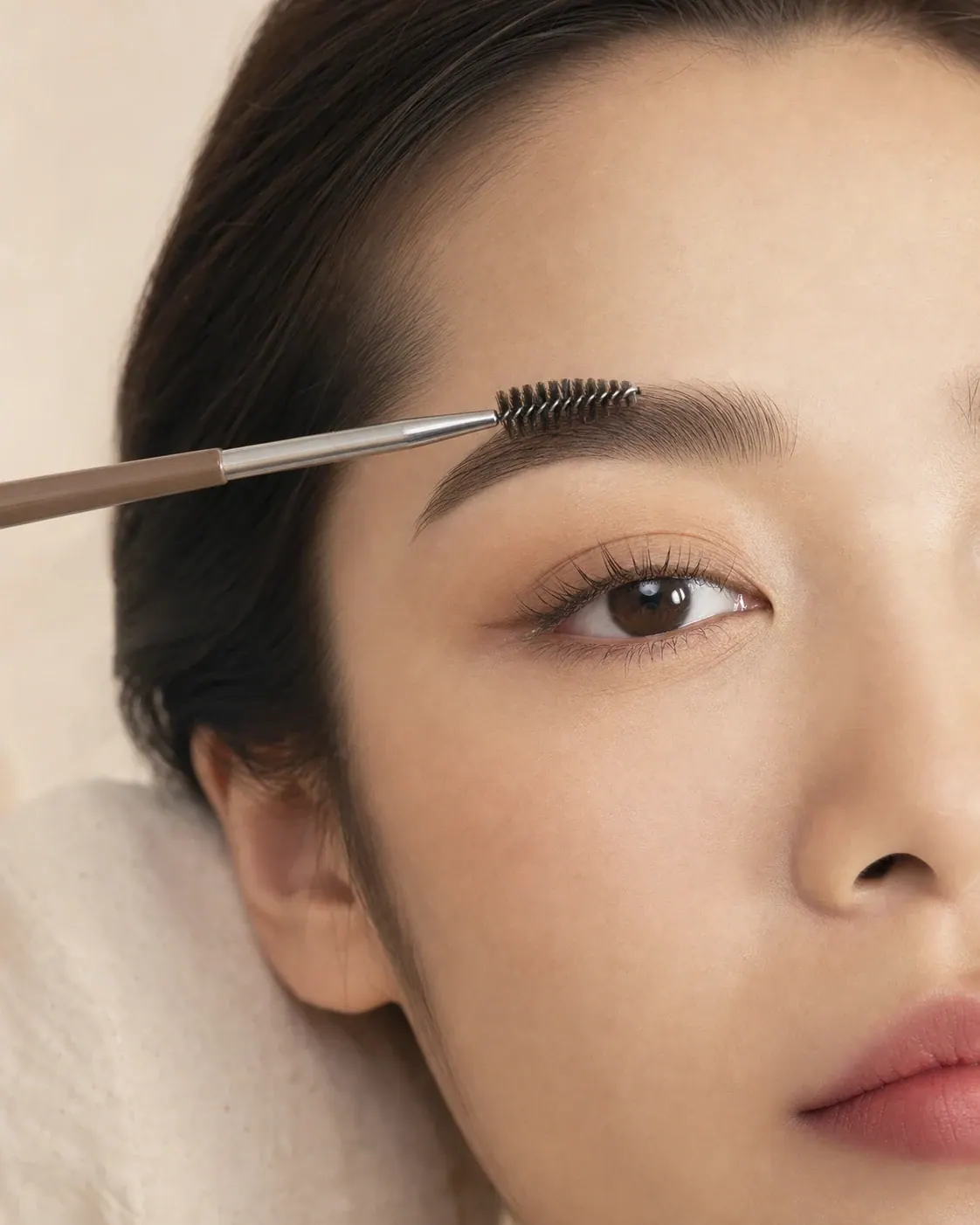
If you spend each morning brushing downturned or crossing brow hairs into place, lamination may be worth discussing. This guide explains the differences between techniques, realistic expectations and preparation for a brow consultation in Da Nang, rather than choosing a service solely from a social-media photograph.
How does brow lamination differ from tattooing and brow gel?
Lamination works on hairs you already have, making them easier to arrange in a chosen direction. Redistributing the hairs may create a softer, fuller-looking shape. The effect depends on their length, density, growth direction and condition.
- Brow gel: provides temporary styling that usually washes away. It can help you try a brushed-up look before deciding on chemical treatment.
- Brow lamination: changes the way hairs sit for several weeks, not through a permanent layer of glue. Light morning brushing may still be needed.
- Cosmetic tattooing or microblading: places pigment into the skin using different techniques, with separate risks and aftercare. Lamination cannot substitute for these methods on an area with almost no hair.
- Brow tinting: changes the visible colour of the hairs. It is a separate decision requiring product and safety assessment, not an automatic part of lamination.
For a balanced shape, read our guide to natural-looking brow and lash design. Attractive brows do not have to stand completely upright or follow the same template on every face.
Who might consider lamination, and who should postpone?
You can discuss our lash and brow service in Da Nang if your brow hairs are reasonably healthy but unruly, downturned or difficult to style. Bring a reference photograph so the provider can compare the look with your starting hairs. A picture starts the conversation; it does not guarantee an identical result.
Postpone when the surrounding skin is red, itchy, scratched, sunburned or peeling, or when hairs are brittle or breaking after previous processing. Report eczema, contact dermatitis, reactions to perming products or dyes, and recent procedures around the eyes. If a skin or eye condition is under medical care, ask your clinician before booking cosmetic treatment.
Share the names of retinoids, exfoliating acids and medicines you use. Do not stop prescribed medicine just to keep an appointment. If adding brow shaping with waxing, skin suitability and the method should be assessed separately rather than assuming waxing belongs immediately after lamination.
Four questions to ask before your appointment
- Are my natural hairs suitable? Very short, sparse or fragile hairs may not support the finish you want.
- Which products will be used? Explain previous allergies and ask about reaction testing under the manufacturer's protocol. A small-area test cannot rule out every reaction.
- What is included? Confirm whether lamination, trimming and tinting are separate, along with total appointment time and cost.
- What aftercare applies? Ask for specific instructions about washing, swimming, steam, makeup and conditioning for the formula used.
Visitors to Da Nang should mention planned beach swims, spa visits and event makeup. Avoid scheduling a first chemical brow treatment immediately before an important event without allowing time to observe your response.
Caring for brows after lamination, step by step
Initially: follow the product-specific protocol
Some systems require avoiding water, steam or brow makeup for an initial period, often discussed within a 24–48-hour window. That is not a universal rule for every formula. Confirm the actual instructions with your provider and avoid rubbing, pulling hairs or pressing the brows into your pillow.
If burning develops or chemicals enter an eye, safety takes priority over preserving the shape: stop the service, immediately rinse the eye with plenty of clean water and seek medical help. Do not keep the area dry when an irritating chemical needs removal.
Once cleansing is allowed: minimise friction
Wash your hands before touching the eye area. Cleanse gently, without scrubbing across brows with a cleansing brush or rough towel. If you need makeup remover, choose one labelled for the eye area, follow its instructions and stop if it stings.
Our home-care catalogue describes instant Polludefense Demake PM 2.5 Eau Micellaire as a face and eye cleanser. It is a cleansing option to discuss when shopping, not a brow-growth treatment or a guarantee of longer-lasting lamination. Check the actual bottle label and your own tolerance, and keep the product out of the eyes.
Daily maintenance: brush and condition sparingly
Use a clean spoolie to brush lightly in the agreed direction instead of forcing every hair upright. Apply only conditioning products recommended for your brows and suitable for that area. Do not put acids, retinol, essential oils or blemish treatments onto freshly processed brows in an attempt to prolong the result.
You can incorporate brow appointments into a personalised care plan, but there is no need to repeat treatment before the hairs and skin are ready. If you are also considering lashes, our guide to how long a lash lift lasts explains why the two services need separate assessment.
When should you reassess, and when should you see a doctor?
The effect softens as hairs grow and are replaced. Around six to eight weeks can be a useful reassessment point, not a compulsory retreatment date or a guaranteed lifespan. If hairs remain dry, unusually curled or broken, wait and discuss their condition. Do not layer an at-home lamination kit over previously stressed hairs.
Redness, itching, swelling or peeling after treatment may indicate irritation or allergy. Stop products that cause discomfort and seek medical advice if symptoms persist or worsen. Eye pain, significant swelling, continuous tearing or any change in vision needs prompt medical assessment, rather than only messaging the salon and waiting.
To discuss your natural brows and schedule, send a booking request or contact Hato Beauty at 127 Chau Thi Vinh Te, Ngu Hanh Son, Da Nang. A spa consultation guides cosmetic care and does not replace dermatological or eye assessment.
Frequently asked questions
Does brow lamination make eyebrows grow thicker?
No. It rearranges existing hairs so brows may look fuller; it does not create follicles. Sudden loss of brow hair or bare patches should be assessed by a doctor rather than simply covered through styling.
When can I wash my face after lamination?
Follow the instructions for the formula used. Some systems have an initial dry period, so confirm this before leaving. Irritation or chemical exposure to the eyes requires immediate safety measures, not delayed rinsing to preserve the shape.
Can another lamination straighten brows that are already dry and breaking?
Further chemical processing is not appropriate while hairs are fragile. Stop home processing, pulling or excessive trimming and speak with the provider. Seek medical advice for skin injury or unusual hair loss.
Is tinting compulsory with brow lamination?
No. Tinting is a separate option that requires assessment of the product and your reaction history. You can choose hair-direction styling alone and retain your natural brow colour.
Editorial sources
This article provides general cosmetic care information and is not intended to diagnose a condition or replace medical advice.