
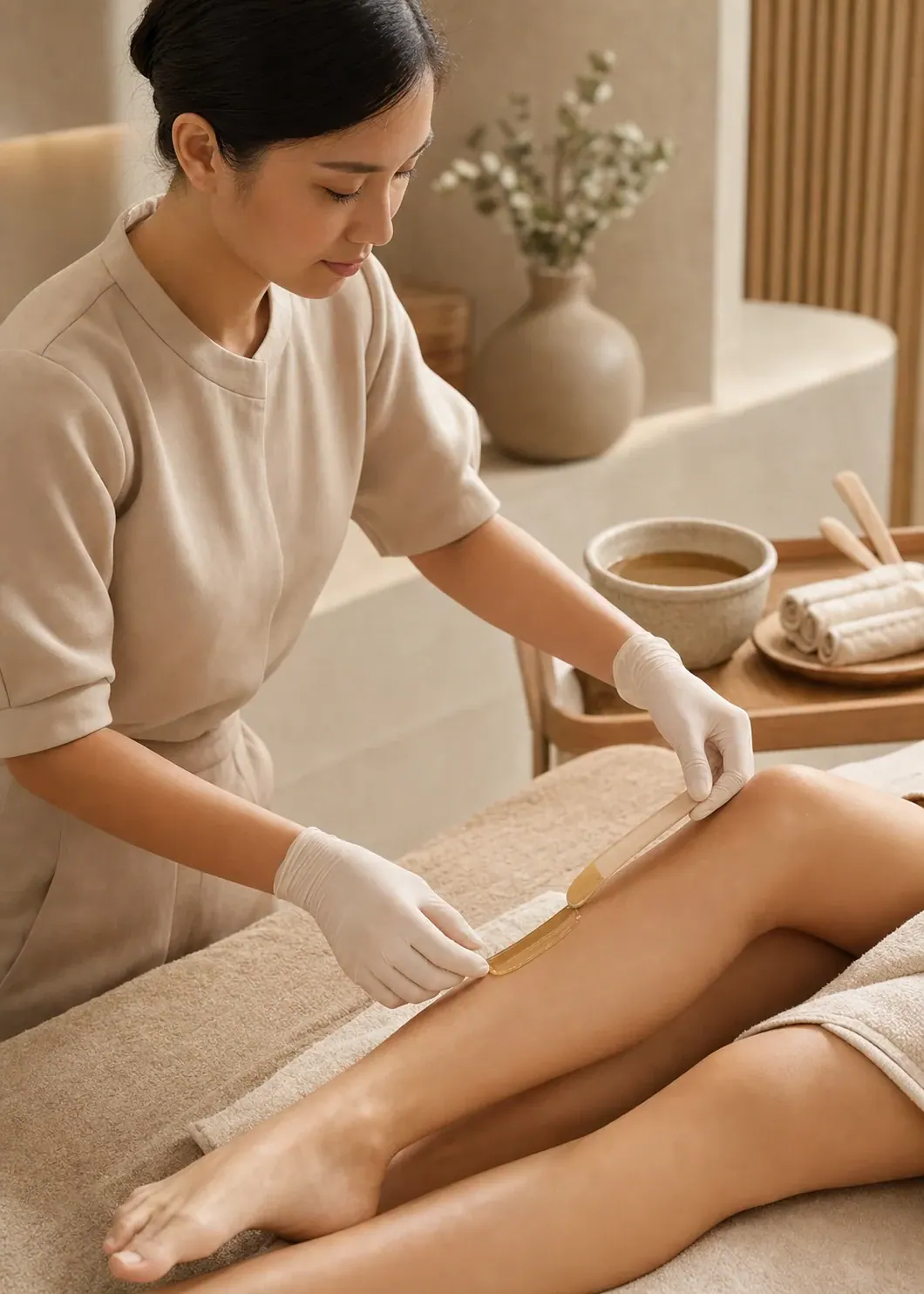
This guide covers realistic regrowth timelines across different areas, how to prepare hair length before visiting the spa and the 48-hour aftercare habits that keep skin calm while reducing ingrown hairs.
How long does waxing last across different areas?
Hair does not grow at the same pace everywhere on the body. Each area has its own follicle density, strand thickness and active growth phase (anagen):
- Brows and upper lip (around 2–4 weeks): Facial hair cycles relatively quickly. Shaping the brows or waxing the upper lip creates an immediately neat, defined look, though fine regrowth usually appears sooner than on the legs.
- Underarms (around 2–3 weeks): Underarm hair grows briskly and experiences daily warmth, sweat and clothing friction. After your very first wax, hairs that were just beneath the surface on appointment day may appear after about two weeks.
- Arms and lower or full legs (around 4–6 weeks): Hair on the arms and legs typically has a longer resting phase. When removed cleanly from the root with proper technique, the surface often stays smooth and soft for several weeks.
- Bikini area (around 3–4 weeks): Results stay consistent when appointments are spaced steadily and paired with breathable clothing and soothing hydration afterwards.
If you are switching from shaving to waxing for the first time, the first session may not feel completely hair-free for a full four weeks. Because individual hairs sit in three staggered growth phases, it often takes two or three regular visits for regrowth to align into a calmer, more predictable rhythm.
Why does waxing last longer than shaving, and how does it differ from technology-led care?
Setting realistic expectations starts with understanding how the three main hair-removal approaches work:
1. Surface shaving
A razor cuts the hair shaft level with the skin surface while leaving the root intact just beneath the pore. Within one to three days, that blunt-cut tip pushes upward and feels noticeably coarse to the touch.
2. Waxing
Warm or specialised wax grips the strand and lifts the entire hair bulb from the follicle. The follicle must rebuild a new strand with a naturally tapered, softer tip. Because the follicle itself remains active, waxing provides immediate smoothness for several weeks rather than permanent reduction.
3. Technology-led hair removal
If your goal is gradual, longer-term reduction across a planned series of sessions rather than immediate root removal with wax, you can explore our area-specific hair removal service in Da Nang to compare suitability, session timing and skin preparation.
How to prepare before a waxing appointment for a smoother, calmer experience
A comfortable waxing session in Da Nang depends not only on the technician's handwork at the spa, but also on how you prepare your skin three to seven days beforehand:
- Allow hair to reach around 0.5–0.6 cm (about a quarter of an inch): The American Academy of Dermatology (AAD) recommends letting hair grow to roughly a quarter-inch—about the length of a grain of rice—so the wax can grip evenly. If you shaved only a few days ago, short stubble may resist the wax; if hair is much longer, let your technician trim it neatly before application.
- Pause retinoids and strong exfoliating acids: Five to seven days before facial waxing (such as brows or upper lip), stop applying prescription retinoids, retinol or high-strength exfoliating acids. These ingredients thin the outermost layer of skin and make it prone to lifting or redness when wax is removed.
- Skip harsh scrubbing on appointment day: Gentle exfoliation 48 hours before your visit can help free trapped surface hairs, but on the day of your appointment simply cleanse with lukewarm water and a mild wash.
- Postpone if skin is sunburned or freshly wind-chafed: Skin that is warm, pink or stinging after hours at Da Nang beach needs cooling hydration and rest before any waxing service.
Five aftercare rules for the first 48 hours after waxing
Right after hair is lifted from the follicle, the pores are temporarily open and the skin surface is more reactive to heat and friction. Five simple habits help your skin settle quickly:
1. Keep the area cool, clean and away from high heat for 24–48 hours
Avoid hot baths, steam rooms, saunas, swimming pools and intense workouts immediately after waxing. Heat, chlorine and sweat can irritate freshly opened follicles and trigger temporary redness or small bumps.
2. Wear loose, breathable fabrics
For underarm, arm, leg or bikini waxing, choose soft, loose cotton clothing on the day of your appointment. Tight waistbands, leggings or synthetic fabrics rubbing against freshly waxed skin are among the most common triggers for post-wax irritation.
3. Apply lightweight, fragrance-free soothing hydration
Use a calming gel or lightweight barrier lotion recommended by your specialist to keep the stratum corneum supple without clogging pores. You can browse our at-home soothing care products to see gentle hydrators suited for post-treatment skin.
4. Wait at least 48–72 hours before gentle exfoliation
Never use a body scrub or loofah the day after waxing. Once any warmth or pinkness has completely subsided—usually after three days—gentle exfoliation once or twice a week paired with daily moisturiser helps new tapered hairs emerge cleanly and reduces ingrown hairs.
5. Protect exposed skin from the sun
Freshly waxed skin on the face, arms or legs is more sensitive to ultraviolet rays. Use protective clothing and a broad-spectrum sunscreen whenever you step outdoors.
When should you postpone waxing or consult a dermatologist?
Responsible cosmetic care means knowing when to wait. Postpone waxing if the area has broken skin, sunburn, active rashes, inflamed pustules, severe varicose veins, or if you are taking oral isotretinoin or systemic skin medication.
If an area develops spreading warmth, increasing pain, pus or persistent swelling after hair removal, seek advice from a dermatologist to rule out folliculitis rather than squeezing bumps or applying unverified topical remedies at home.
At Hato Beauty, waxing can be booked as a standalone visit or woven into a broader personalised care plan alongside facial and body treatments. When you are ready to confirm your preferred area, timing and guide price, send a booking request or contact the Hato Beauty team so we can prepare a private room for you.
Frequently asked questions
Does waxing make hair grow back thicker or darker?
No. Unlike shaving, which leaves a blunt cross-section at the surface, waxing removes the hair from the root so the new strand grows in with a naturally fine, tapered tip. Hair thickness and colour are determined by genetics and hormones rather than waxing.
How soon after shaving can I book a waxing appointment?
Wait roughly 10 to 14 days after your last shave so the hair reaches about 0.5–0.6 cm (a quarter of an inch). That length allows the wax to hold the hairs cleanly in a single pass without unnecessary repeat application.
What should I do if I notice an ingrown hair between appointments?
Do not dig at the skin with fingernails or sharp tweezers, which can cause scarring or post-inflammatory dark spots. Apply a clean warm compress, keep the area moisturised and use gentle exfoliation once the skin is calm. See a dermatologist if a bump becomes painful or infected.
Can sensitive skin be waxed safely?
Yes, provided the skin barrier is intact and free from active irritation. Let your technician know beforehand so we can temperature-test the wax on a small patch, work in smaller sections and apply soothing care immediately afterwards.
How often should I schedule regular waxing?
Most guests schedule brow, upper-lip, underarm or bikini waxing every 3 to 4 weeks, and arm or leg waxing every 4 to 6 weeks. Book when hair has grown back evenly to a suitable length rather than returning too early.
Editorial sources
- American Academy of Dermatology — Hair removal: How to wax
- American Academy of Dermatology — How to remove facial hair
- NHS — Ingrown hairs
This article provides general cosmetic care information and is not intended to diagnose a condition or replace medical advice.