
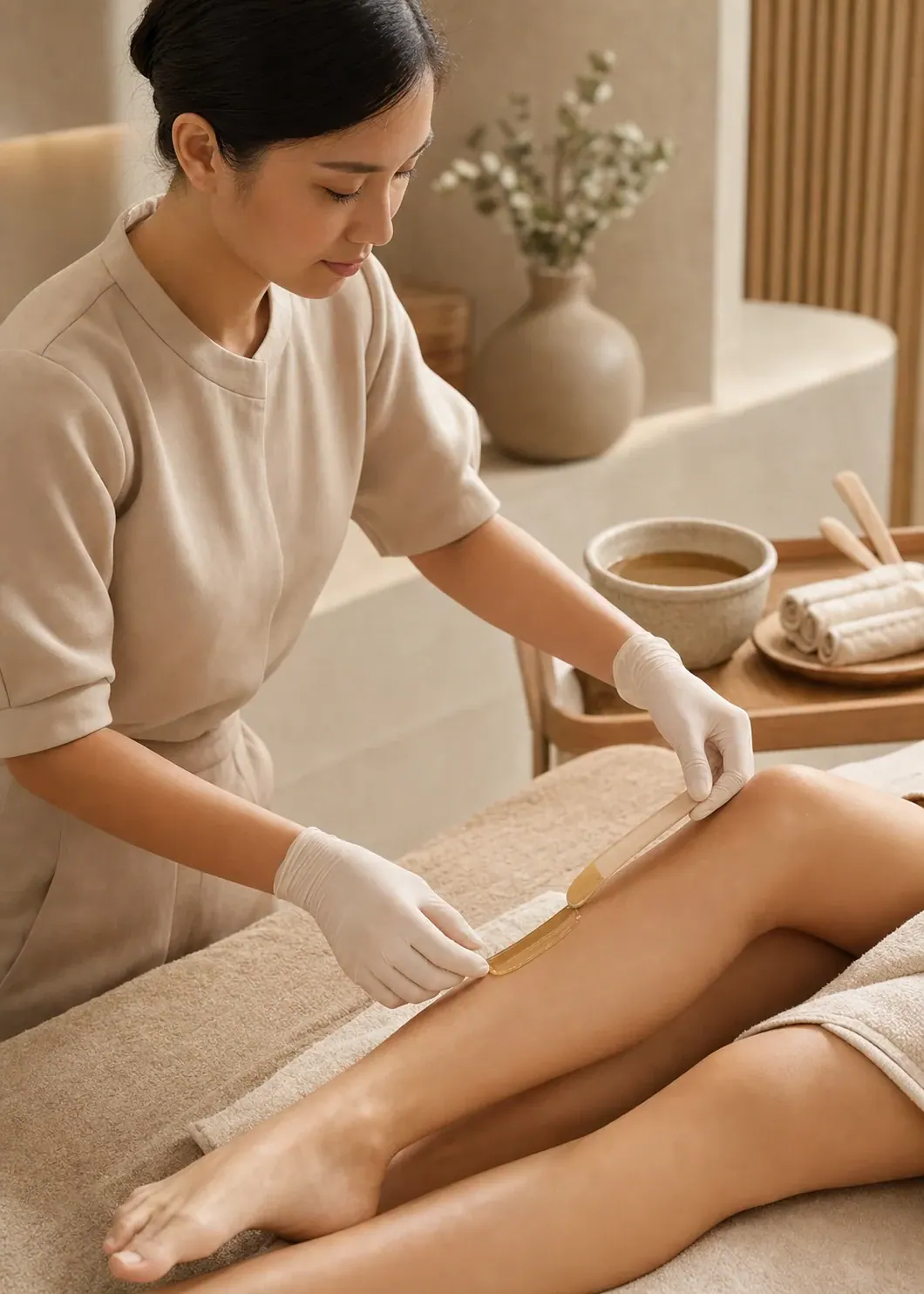
Skin that felt smooth can develop a few itchy bumps later, making it tempting to scrub harder or pull out a trapped strand. Those shortcuts can add injury. This guide covers cautious care for legs, underarms and the external bikini line, and what to discuss before your next waxing appointment in Da Nang.
What is an ingrown hair, and is it the same as folliculitis?
An ingrown hair grows back into the skin, producing a raised bump that may itch or feel uncomfortable. Sometimes a strand is visible beneath the surface, but not always. According to the NHS, shaving, waxing, plucking and threading can all be associated with ingrown hairs. Coarse or curly hairs are more prone to them.
Folliculitis means inflammation around a hair follicle and has several possible causes, including infection. The conditions can overlap, but a red or pus-filled bump is not enough to identify its cause at home. Immediate soreness after waxing can also reflect irritation or surface injury, rather than a newly ingrown strand.
For recurrent, spreading or uncertain bumps, a dermatologist can help distinguish the causes. Our guide to rough back skin and bumpy upper arms explains why different textures should not all be treated as the same problem.
Four first steps when a bump appears
1. Pause waxing, plucking and close shaving on the irritated area
Do not repeatedly treat the same spot just to make it feel hair-free. Give irritated skin a break and tell the provider when the bump appeared, how it feels, which products you used and whether it is changing. A private photograph for your own monitoring can support a conversation with a professional, but cannot replace an examination.
2. Cleanse gently and reduce friction
Use comfortably warm water and a cleanser your skin already tolerates, then pat dry. Avoid stiff loofahs, brushes, coarse salt and improvised applications of rubbing alcohol. Wear clean, soft, loose clothing if fabric rubs against your underarms, legs or bikini line.
After exercise or a busy day moving around Da Nang, change out of damp, sweaty clothes when practical. This can improve comfort and reduce rubbing; it does not guarantee that every bump will be prevented.
3. Do not dig with needles, tweezers or fingernails
Even if you can see the hair, trying to extract it yourself may cause bleeding, infection, dark marks or scars. The NHS advises against scratching, picking or squeezing ingrown hairs. If a strand needs release with an instrument, let a healthcare professional assess and perform any appropriate procedure rather than treating it as routine home care.
4. Keep moisturising simple on intact skin
If the surrounding skin is dry and unbroken, apply a modest amount of a familiar moisturiser that does not sting. Stop any product that increases itching or redness. Do not experiment with antibiotics, steroid creams or several exfoliating acids to see which makes the bump flatten fastest.
Should you exfoliate immediately to release the hair?
Exfoliation may help limit surface build-up in some circumstances, but do not scrub or apply exfoliating actives to skin that is painful, swollen, pus-filled, broken or still sore after waxing. Timing should reflect how the skin is actually recovering and the product instructions, rather than just the number of hours since your appointment.
Once the skin has fully settled, ask a pharmacist or doctor about suitable products if ingrown hairs recur. Introduce any option cautiously according to its label instead of combining gritty scrubs with several acids at once. Read our guide to when to refresh the skin's surface for a gentler way to plan body care.
For bikini care, this article refers only to external hair-bearing skin. Do not apply body scrubs, acids or moisturisers to mucous membranes or sensitive genital areas unless the product is specifically intended for that use.
Choosing products and preparing for your next wax
Browse our home-care catalogue to compare moisturising textures. For example, Madeleine Ritchie 16+ Active Mānuka Honey Skin Care Crème is listed for dry skin needing extra care. It is a moisturising option to discuss when shopping, not a medicine for ingrown hairs, folliculitis or infection. Check the actual label, ingredients and your tolerance, and do not apply it to open skin or mucous membranes.
Before a waxing appointment in Da Nang, explain which areas develop bumps, what happened after the previous session and which products you use. Repeat waxing only when the skin is suitable. Waxing over inflamed bumps to remove trapped hairs is not a treatment; your appointment may need adjustment or postponement for medical assessment.
Our guide to how long waxing lasts separates normal regrowth scheduling from care needed for a reaction. Within a personalised care plan, comfortable skin matters more than keeping every area continuously hair-free.
If you switch to shaving between visits, general NHS and AAD advice includes softening the hairs with warm water, using appropriate shaving products and shaving with the direction of growth rather than repeatedly shaving dry skin very closely. Frequency and method need individual advice when bumps persist. Longer-term hair reduction also requires separate assessment and is not immediate treatment for an infected bump.
When should you seek medical help?
See a doctor if a bump or its surroundings becomes very painful, hot or swollen, or if you develop fever, chills or feel unusually unwell. Pus, spreading redness, repeated episodes or scarring are also reasons to seek professional advice. Do not wait for the next spa appointment if symptoms are getting worse.
A spa provider can adjust cosmetic services on healthy skin, but does not diagnose infection or prescribe medication. To discuss whether an appointment should be postponed, contact Hato Beauty or request a consultation at 127 Chau Thi Vinh Te, Ngu Hanh Son, Da Nang, and describe your previous response clearly.
Frequently asked questions
Can I use tweezers when I can see a hair beneath the skin?
Do not dig, pierce or pull at a strand beneath the skin yourself. This can cause injury and infection. If a bump persists or a hair needs release, a healthcare professional should assess it.
Should I scrub as soon as bumps appear after waxing?
Not while the area is sore, red, swollen, pus-filled or broken. Consider surface care only after the skin has healed and settled, using suitable guidance rather than forceful rubbing to push a hair out.
Can a honey moisturiser cure ingrown hairs?
A cosmetic moisturiser should not be treated as medicine for ingrown hairs or infection. It may improve comfort on intact dry skin if tolerated; a hot, painful or pus-filled bump needs separate assessment.
Does an ingrown hair always mean the waxing was performed incorrectly?
No such conclusion can be drawn from a bump alone. Hair characteristics, removal methods, friction and skin condition may contribute. Discussing the actual response helps plan future care; recurrent bumps warrant medical assessment.
Editorial sources
- NHS — Ingrown hairs
- American Academy of Dermatology — 6 razor bump prevention tips from dermatologists
This article provides general cosmetic care information and is not intended to diagnose a condition or replace medical advice.